









What Positive Behaviour Support is
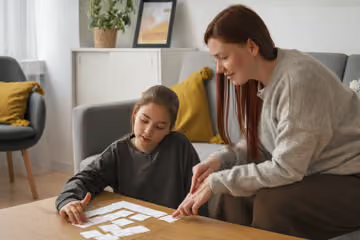
Positive Behaviour Support (PBS) aims to improve a person’s quality of life and reduce behaviours of concern. Our practice framework is inspired by the Australian Government’s definition of positive behaviour support in the National Framework (2014): the integration of contemporary disability service ideology with the clinical framework of applied behaviour analysis.
We work closely with families, caregivers, other stakeholders and the person who needs behaviour support, so that outcomes last and support networks grow.
How we work
We follow a systematic process: a Functional Behaviour Assessment (FBA), then developing, implementing and evaluating a Behaviour Support Plan (BSP).
Our approach focuses on improving quality of life while decreasing the behaviours that get in the way, and the need to use restrictive interventions. We build functional skills in clients, carers and support staff so changes last.
Why families and referrers choose us
Research evidence-based interventions. Skilled practitioners. A holistic approach. Collaborative work with everyone involved in the person’s life.
What Positive Behaviour Support includes
Functional Behaviour Assessment
We work out what a behaviour is communicating and what keeps it going.
A Behaviour Support Plan
A written plan, finalised with input from everyone involved.
Training to put it into practice
Carers, family and support staff learn the strategies in the plan.
Monitoring and review
We check the plan is working and change it when needed.
Working with your network
Families, caregivers and other stakeholders work together with the person.
Follow-ups
We keep in touch after outcomes are reached.
From referral to follow-up.
- Referral received and accepted
- Key stakeholders’ engagement meeting
- Functional Behaviour Assessment (FBA)
- Behaviour Support Plan (BSP) finalised with stakeholder input
- Training and implementation of the plan
- Plan monitoring and review
- Outcome achieved
- Follow-ups

Is Positive Behaviour Support right for you?
- A person has behaviours of concern that affect their quality of life
- Carers or support staff want practical strategies they can use every day
- A plan is needed that aims to reduce the need for restrictive practices
- Support is needed for developmental disability, autism, mental health conditions or brain injury
Frequently asked questions
What is Positive Behaviour Support?
Positive Behaviour Support (PBS) aims to improve a person’s quality of life and reduce behaviours of concern. It combines contemporary disability service practice with the clinical framework of applied behaviour analysis.
What happens after we send a referral?
The referral is received and accepted, then we meet key stakeholders, complete a Functional Behaviour Assessment, finalise the Behaviour Support Plan with everyone’s input, train people to use it, and then monitor and review it.
Who takes part?
We work with families, caregivers, other stakeholders and the person who needs behaviour support.
Do you use restrictive practices?
Our approach aims to eliminate or decrease the need for restrictive interventions.
What does it cost, and is it covered by the NDIS?
Our services are funded through the NDIS.
Related services
Applied Behaviour Analysis (ABA)
Comprehensive and focused ABA programs, including home-based services, building communication, learning and everyday skills.
Read more →Therapeutic Supports
Counselling and behavioural skill training to build functional skills and independence.
Read more →
Training and Supervision
Training, supervision and internships in ABA, psychology and social work.
Read more →Ready to make a referral?
Send us a referral online, or get in touch first if you would like to talk it through.